View 2CH Files Instantly Using FileViewPro
페이지 정보

본문
A 2CH file is usually a two–channel stereo audio track linked to high-resolution Super Audio CD (SACD) discs, where it contains the left and right channels of a song in CD-quality PCM form. The format grew out of the SACD ecosystem developed by Sony and Philips as a successor to standard audio CDs, and it is also supported by tools such as the open-source Super Audio CD Decoder from the SourceForge community, which popularized the "Super Audio CD Track" file type. Historically, .2CH tracks gave listeners a conventional stereo version of the richer multichannel DSD program found on the disc, allowing playback on regular CD-capable hardware while keeping the audiophile master separate. To see more about 2CH file error take a look at our site. Support for this niche extension is inconsistent across devices and software, so it is common to see playback errors or prompts for additional codecs. FileViewPro fits neatly into this gap by automatically recognizing .2CH audio tracks, letting you preview the stereo content, inspect technical details like sample rate and bit depth, and in many cases convert them into more familiar formats such as MP3, WAV, FLAC, or other standard audio types without having to hunt down dedicated SACD utilities.
Audio files quietly power most of the sound in our digital lives. Every song you stream, podcast you binge, voice note you send, or system alert you hear is stored somewhere as an audio file. In simple terms, an audio file is a structured digital container for captured sound. Sound begins as an analog vibration in the air, but a microphone and an analog-to-digital converter transform it into numbers through sampling. The computer measures the height of the waveform thousands of times per second and records how tall each slice is, defining the sample rate and bit depth. When all of those measurements are put together, they rebuild the sound you hear through your speakers or earphones. The job of an audio file is to arrange this numerical information and keep additional details like format, tags, and technical settings.
Audio file formats evolved alongside advances in digital communication, storage, and entertainment. At first, engineers were mainly concerned with transmitting understandable speech over narrow-band phone and radio systems. Standards bodies such as MPEG, together with early research labs, laid the groundwork for modern audio compression rules. The breakthrough MP3 codec, developed largely at Fraunhofer IIS, enabled small audio files and reshaped how people collected and shared music. Because MP3 strips away less audible parts of the sound, it allowed thousands of tracks to fit on portable players and moved music sharing onto the internet. Other formats came from different ecosystems and needs: Microsoft and IBM introduced WAV for uncompressed audio on Windows, Apple created AIFF for Macintosh, and AAC tied to MPEG-4 eventually became a favorite in streaming and mobile systems due to its efficiency.
Over time, audio files evolved far beyond simple single-track recordings. Understanding compression and structure helps make sense of why there are so many file types. Lossless standards like FLAC and ALAC work by reducing redundancy, shrinking the file without throwing away any actual audio information. By using models of human perception, lossy formats trim away subtle sounds and produce much smaller files that are still enjoyable for most people. Another key distinction is between container formats and codecs; the codec is the method for compressing and decompressing audio, whereas the container is the outer file that can hold the audio plus additional elements. This is why an MP4 file can hold AAC sound, multiple tracks, and images, and yet some software struggles if it understands the container but not the specific codec used.
As audio became central to everyday computing, advanced uses for audio files exploded in creative and professional fields. In professional music production, recording sessions are now complex projects instead of simple stereo tracks, and digital audio workstations such as Pro Tools, Logic Pro, and Ableton Live save projects that reference many underlying audio files. Surround and immersive audio formats let post-production teams position sound above, behind, and beside the listener for a more realistic experience. Video games demand highly responsive audio, so their file formats often prioritize quick loading and playback, sometimes using custom containers specific to the engine. Emerging experiences in VR, AR, and 360-degree video depend on audio formats that can describe sound in all directions, allowing you to hear objects above or behind you as you move.
In non-entertainment settings, audio files underpin technologies that many people use without realizing it. Smart speakers and transcription engines depend on huge audio datasets to learn how people talk and to convert spoken words into text. VoIP calls and online meetings rely on real-time audio streaming using codecs tuned for low latency and resilience to network problems. In call centers, legal offices, and healthcare settings, conversations and dictations are recorded as audio files that can be archived, searched, and transcribed later. Smart home devices and surveillance systems capture not only images but also sound, which is stored as audio streams linked to the footage.
A huge amount of practical value comes not just from the audio data but from the tags attached to it. Modern formats allow details like song title, artist, album, track number, release year, and even lyrics and cover art to be embedded directly into the file. Because of these tagging standards, your library can be sorted by artist, album, or year instead of forcing you to rely on cryptic file names. For creators and businesses, well-managed metadata improves organization, searchability, and brand visibility, while for everyday listeners it simply makes collections easier and more enjoyable to browse. Over years of use, libraries develop missing artwork, wrong titles, and broken tags, making a dedicated viewer and editor an essential part of audio management.
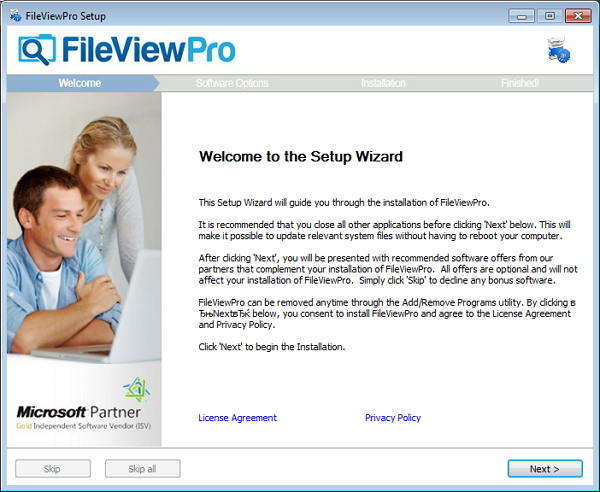
As your collection grows, you are likely to encounter files that some programs play perfectly while others refuse to open. One program may handle a mastering-quality file effortlessly while another struggles because it lacks the right decoder. Shared audio folders for teams can contain a mix of studio masters, preview clips, and compressed exports, all using different approaches to encoding. At that point, figuring out what each file actually contains becomes as important as playing it. By using FileViewPro, you can quickly preview unfamiliar audio files, inspect their properties, and avoid installing new apps for each extension you encounter. Instead of juggling multiple programs, you can use FileViewPro to check unknown files, view their metadata, and often convert them into more convenient or standard formats for your everyday workflow.
If you are not a specialist, you probably just want to click an audio file and have it work, without worrying about compression schemes or containers. Every familiar format represents countless hours of work by researchers, standards bodies, and software developers. From early experiments in speech encoding to high-resolution multitrack studio projects, audio files have continually adapted as new devices and platforms have appeared. A little knowledge about formats, codecs, and metadata can save time, prevent headaches, and help you preserve important recordings for the long term. When you pair this awareness with FileViewPro, you gain an easy way to inspect, play, and organize your files while the complex parts stay behind the scenes.
- 이전글동두천 하나약국 비아그라 【vbQq.top】 25.12.01
- 다음글광양 시알리스 구매 - 정품 시알리스 구입처 안내 25.12.01
댓글목록
등록된 댓글이 없습니다.